
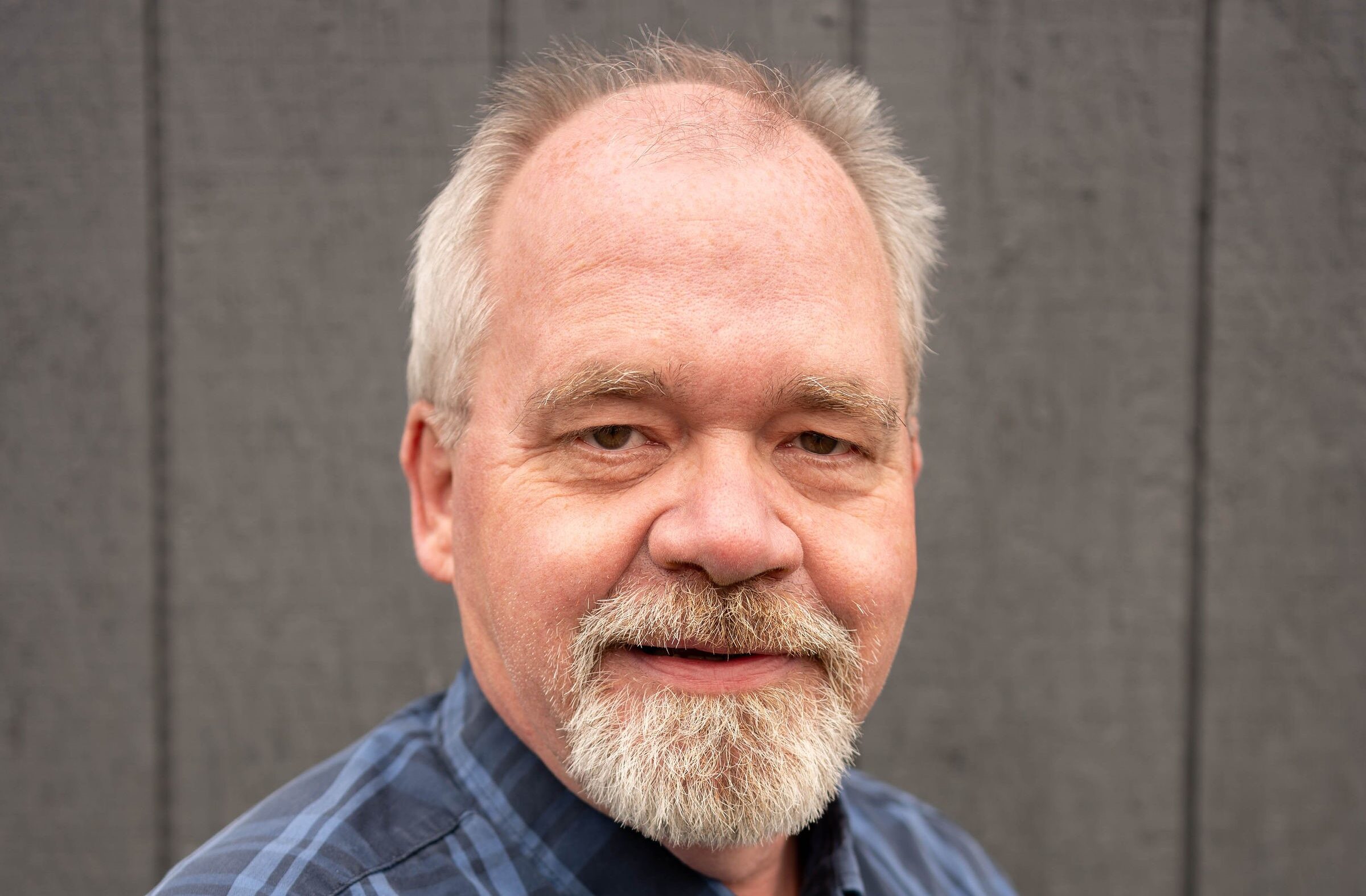
Not every journalist arrives at their craft through a conventional door. Gregory Matthew Hitchcock arrived through discipline, disruption, and a kind of interior reckoning that most people spend a lifetime avoiding. A military background that taught him the power of structure. A personal encounter with schizophrenia that rewired his understanding of perception, identity, and truth. A self-taught filmmaking practice that forced him to stop explaining the world and start showing it. Across more than twenty-five years and a body of work spanning journalism, documentary film, memoir, and digital innovation, Hitchcock has built something rarer than a media career. He has built a voice: one that carries the weight of experience, the discipline of craft, and the kind of moral clarity that only comes from having lived on both sides of the stories he tells.
STRUCTURE AS A NARRATIVE ENGINE: THE MILITARY FOUNDATION
Military service leaves fingerprints on everything a person does after it, and for Hitchcock, those fingerprints show up most clearly in how he constructs a story. The structure he absorbed through service, the internal compass that equates order with purpose, did not simply carry over into journalism. It became, in his words, a narrative engine. The instinct for clarity, sequence, and consequence that military training instils is the same instinct that makes a long-form story hold together, that keeps a documentary from losing its thread, that gives an argument its backbone.
What makes Hitchcock’s relationship with structure interesting, however, is that he has never let it calcify into rigidity. He is as aware of structure’s capacity to constrain as of its capacity to liberate. The storytellers who interest him most are those who understand the form well enough to know when breaking it will produce something truer than following it would. That tension between discipline and creative freedom runs through everything he has built, from his journalism to his films to Pegasus Digital Media itself.
LIVING WITH SCHIZOPHRENIA: THE DEPTH THAT CRISIS PRODUCES
To speak openly about schizophrenia in a professional context still requires a particular kind of courage, and Hitchcock exercises it without deflection. His experience with the condition has, in his own assessment, been one of the most formative forces in his creative life. Not despite the difficulty, but because of it. Living with multiple levels of interpretation happening simultaneously gave him a vivid awareness of inner worlds and a sensitivity to how perception shifts that no amount of academic study could replicate. It is, he notes, the kind of knowledge you can only earn through experience.
That experience has translated directly into his work. The authentic depictions of inner conflict, the questioning of identity, the fluid treatment of truth that characterise his storytelling are not stylistic choices. They are the residue of a life lived at the edge of perception and pulled back. Navigating periods of instability also taught him something about the coexistence of vulnerability and strength that has shaped his entire understanding of what makes a subject worth telling. The people he gravitates toward in his journalism are often carrying something invisible. He knows how to see it because he has carried it himself.
PEGASUS DIGITAL MEDIA: JOURNALISM THAT BREAKS FORM WITH PURPOSE
Hitchcock founded Pegasus Digital Media as a direct response to what he sees as the limitations of traditional journalism’s rigid separation between reporter and subject, between fact and feeling, between information and the human experience behind it. Pegasus, as he defines it, is a hybrid storytelling platform that blends journalism, creative narrative, and personal perspective into a single cohesive voice. It is not bound by the conventions of neutrality that traditional reporting enforces. It leans into subjectivity where subjectivity adds meaning, treating storytelling as a dynamic exchange rather than a transmission of facts.
The digital dimension of the platform reflects his broader conviction about where journalism is heading. Digital tools, in his view, do not replace traditional storytelling values. They amplify them, making it possible to blend text, video, audio, data, and lived experience into narrative ecosystems that feel alive and responsive. The shift from one-way reporting to participatory storytelling, where audiences are collaborators and contributors rather than passive consumers, is the evolution he has built Pegasus to embody. It is journalism that is, by design, more flexible, more creative, and more human.
FROM PAGE TO LENS: THE SELF-TAUGHT FILMMAKER
The transition from writing to documentary filmmaking confronted Hitchcock with a challenge that is more fundamental than it might appear: learning to think in images rather than in sentences. Writing allowed complete control over every detail on the page. Filmmaking demanded something different: letting the world speak for itself through framing, pacing, sound, and the unpredictable reality of real people in real situations. The technical learning curve, cameras, lighting, audio, editing, was steep and self-navigated. He made mistakes, experimented constantly, and built his practice through doing rather than instruction.
What ultimately bridged the gap was his decision to treat filmmaking as an extension of his existing storytelling instincts rather than a departure from them. The structure, narrative flow, and emotional clarity that had always guided his written work became the compass he carried behind the camera. Over time he learned to trust the visual medium, to let moments breathe, and to allow the story to emerge organically from the material rather than imposing a pre-formed shape upon it. His documentaries on social and cultural issues reflect that discipline: they inform, but their deeper ambition is to spark recognition, to help audiences see themselves in stories they might otherwise have passed over.
PURPOSE OVER PROFIT: A DIFFERENT MEASURE OF SUCCESS
Hitchcock is explicit about the values that govern both his business decisions and his creative ones, and they are not the values that typically drive media organisations. Community, resilience, and purpose are his operating principles, and he applies them with the same rigour others apply to profit margins. Success, in his framework, is measured by the strength of the relationships built and the impact the work has on the people it reaches. Resilience guides how he navigates challenges: focused on long-term sustainability rather than quick wins, grounded in values when the path ahead is unclear.
This orientation is not naive idealism. It is a coherent strategic position. Journalism built on authentic purpose, he argues, produces work that feels honest rather than manufactured, that builds trust rather than eroding it, and that creates the kind of sustained audience relationship that no volume of marketing can replicate. In a media environment saturated with noise and shaped by the incentives of engagement metrics and advertising revenue, a voice grounded in genuine conviction carries a different kind of authority.
A LEGACY WRITTEN IN IMPACT, NOT ACCOLADES
The legacy Gregory Matthew Hitchcock is building is one he measures in the simplest possible terms: did the journalism help someone feel seen? Did the film open a door to understanding? Did the advocacy encourage someone to seek support or speak up? He wants his work to stand as proof that honest storytelling can shift conversations, reduce stigma, and inspire resilience, not as a claim to personal greatness but as evidence of what the medium is capable of when it is used with integrity and purpose.
His memoir and advocacy work around mental health carry a particular weight in that legacy, speaking directly to the people who need most to hear that their story matters, that their voice matters, and that there is a path forward even when it is impossible to see. For a journalist who has spent twenty-five years following the threads that feel meaningful, urgent, and human, that message is not separate from the professional work. It is the reason for it.